Buying and selling guides
Mallorca marinas and mooring considerations
A berth is part of the ownership system, not a parking space added afterwards. Around Mallorca, management models, waiting lists, dimensional limits, seasonal products and shore-side services vary. Confirm the berth and its written terms for the exact boat before a purchase depends on it.
Published Updated
1. Choose the cruising area before the marina
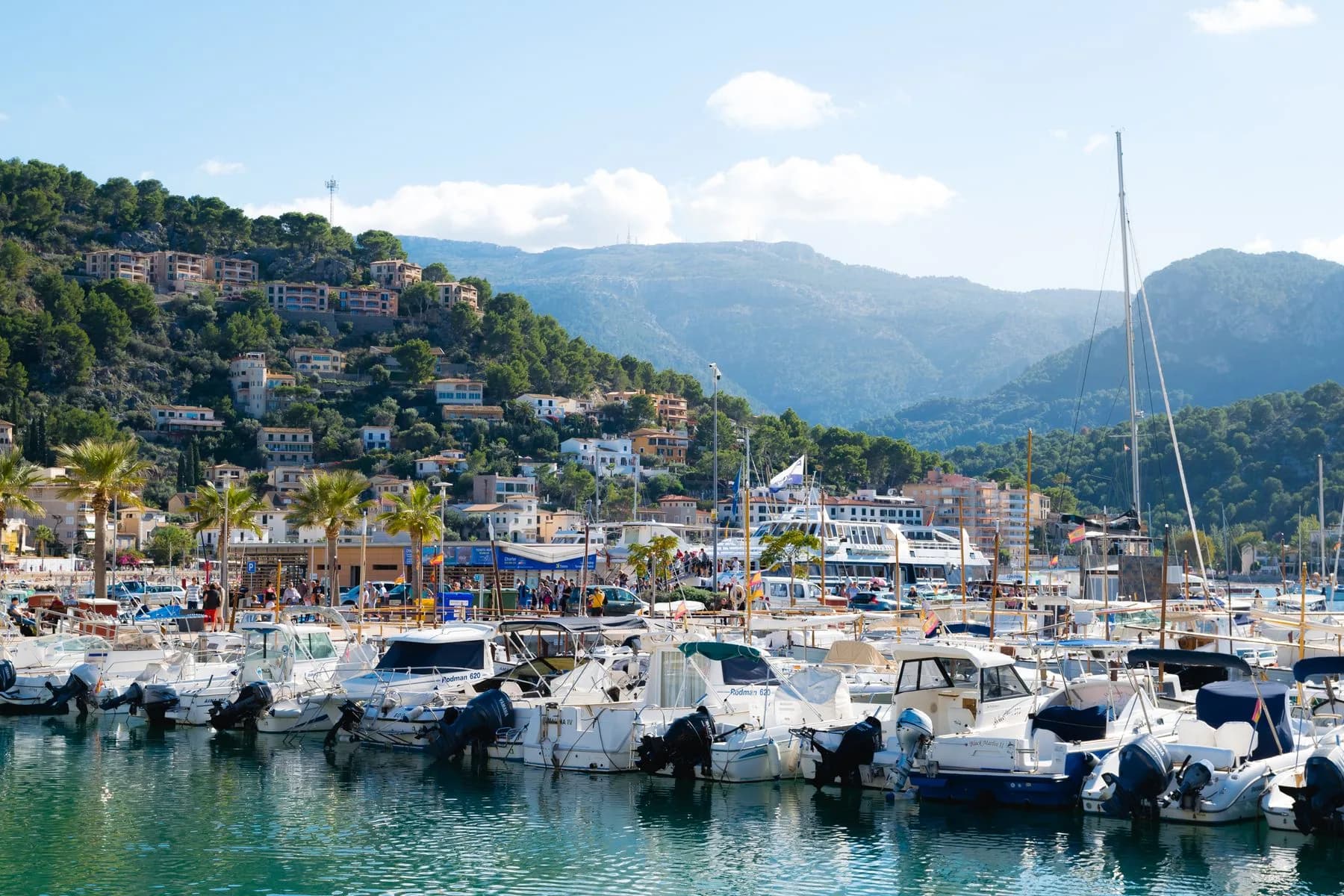
Start with the coast you expect to use most. Palma and the southwest suit owners who value airport access, a large service ecosystem and routes towards the southwest and west. Sóller places the Tramuntana coast outside the harbour. Pollença and Alcúdia favour northern cruising, while Porto Cristo, Portocolom, Cala d’Or and Cala Rajada support eastern itineraries. These are starting points, not guarantees of sea conditions.
Test the ordinary ownership day: travel time, parking, loading provisions, fuel, guest pickup and the return in poor weather. A beautiful base that is inconvenient may reduce use. Also check safe alternatives nearby; an exposed anchorage or long return route can matter more than the straight-line distance to a favourite cala.
Sources: Ports de les Illes Balears
2. Understand who manages the berth
Mallorca’s berthing supply is not one uniform system. PortsIB manages autonomous-community ports and provides official maps, direct-management reservations, base-berth procedures and seasonal transit processes. Palma and Alcúdia are ports of general interest managed by the Balearic Port Authority, with yacht clubs and commercial marinas operating facilities under their own arrangements. Private clubs and concessionaires have separate contracts and availability.
Ask the operator—not only the boat seller—what is being offered: nightly transit, seasonal transit, annual rental, club membership, temporary authorisation, concession-related right or something else. Confirm start and end dates, renewal, waiting-list status, price review, subletting, liveaboard limits, commercial use and termination. An invoice from last year does not promise next year’s berth.
Sources: Ports de les Illes Balears · Ports de les Illes Balears
3. Measure the whole boat
Give the marina the maximum space the boat occupies: overall length with anchor, pulpit, outboards and bathing platform; maximum beam with permanent rubbing strakes; and loaded draft including drives, keel or appendages. Add tender position where it remains deployed. Confirm whether the marina measures the boat or accepts manufacturer data and whether a later modification changes the tariff or invalidates the allocation.
The current PortsIB transit portal illustrates why exact fit matters: its listed direct-management berths accept up to 15.00 m length and 4.46 m beam at several ports, while Cala Bona, Colònia de Sant Jordi, Ciutadella and Fornells are listed up to 12 m and 4.00 m. These limits concern that reservation system, not every berth on Mallorca. Obtain written confirmation for the chosen facility.
4. Audit services and operating limits
Match shore power voltage, phase and amperage to the boat, and ask whether consumption is metered. Confirm potable water, fuel type and opening times, pump-out, waste and hazardous-waste disposal, Wi-Fi, security, showers, laundry and delivery access. For maintenance, check travel-lift capacity and geometry, crane, hardstanding, engine representation and whether outside contractors may enter.
Inspect the actual berth at the expected season and, if possible, in fresh wind. Note manoeuvring room, prevailing crosswind, wash, surge, mooring arrangement, fendering, quay height, boarding safety and emergency access. Ask what the marina requires for lines, insurance, shore-power leads and unattended storm preparation.
Sources: Ports de les Illes Balears · Ports de les Illes Balears
5. Price the complete berth year
Compare like with like: base fee, tax, electricity and water, parking, membership, security deposit, winter storage, lifting, cradle, pressure wash and mandatory local services. Ask how the charge is calculated—boat dimensions, berth category, season or minimum band—and when rates can change. Include the cost of an alternative if the contracted period does not cover the full year.
Availability is part of cost. PortsIB uses registration and vessel data for reservations and also runs specific seasonal transit application processes; base berths may involve temporary authorisations and waiting lists. Submit accurate documents early, but do not purchase a boat on the assumption that an application will succeed.
Sources: Ports de les Illes Balears · Ports de les Illes Balears
6. Plan anchoring and buoy use responsibly
A home berth does not remove the need to plan legal overnight stops. In Balearic waters, the regional Posidonia rules generally prohibit anchoring directly on Posidonia oceanica and prohibit uncontrolled anchoring. In regulated areas, use authorised low-impact buoy systems and follow the more protective rules of any natural park or Natura 2000 management plan.
Consult the current official Posidonia map before anchoring, then confirm the seabed visually and allow for swing, depth, weather and neighbouring boats. PortsIB lists official buoy fields and provides reservations. Map layers and buoy availability can change; on-board judgement and current notices remain necessary.
Sources: Government of the Balearic Islands · Ports de les Illes Balears
7. Confirm the berth before relying on it
Send the operator the boat’s registration, insurance, exact dimensions, flag, ownership/use category and arrival dates. Request a written offer or authorisation naming the boat, berth type, period, total charges and key conditions. If buying a boat advertised “with mooring,” make the purchase conditional on the operator’s written confirmation of what—if anything—can transfer.
Keep a fallback plan until both boat and berth are secure. That may be a transit reservation, dry stack for a smaller boat, winter hardstanding or another coast. The best home port is the one that safely fits the boat, supports how you use it and remains contractually available—not necessarily the most famous address.
Sources and further reading
- Official mooring and buoy reservationsPorts de les Illes Balears
- Official ports map and facility filtersPorts de les Illes Balears
- Direct-management transit berth dimension limitsPorts de les Illes Balears reservation portal
- Seasonal transit berth proceduresPorts de les Illes Balears
- General conditions for transit-berth reservations and usePorts de les Illes Balears
- Rules for anchoring and regulated buoy fields over PosidoniaGovernment of the Balearic Islands